|
Horn Furniture - Chairs
Beginning in the 1870's, horn chairs,
sofas, halltrees and footstools became fashionable.
Some makers such as Wenzel Friedrich (a cabinet maker by trade), Charles Puppe, William
Mittmann (all of San Antonio) and many others began making horn furniture on a large
scale. Other makers, such as Herman Metz (a St. Joseph, MO fireman) made horn furniture in
lesser quantities as a hobby. Plenty of horn furniture was also made in Chicago and St.
Louis. The earliest cattle horn chair known to me was made in 1876, and a chair made of
elk antlers was presented to President Lincoln by California trapper, Seth Kinman.
IMPORTANT: There is
much confusion about chairs made by Wenzel Friedrich. Read this link (CLICK HERE) before you buy or sell to compare his work with
that of William Mittmann, Charles Puppe and the Appel Bros., all of whom are Texas makers.
I |
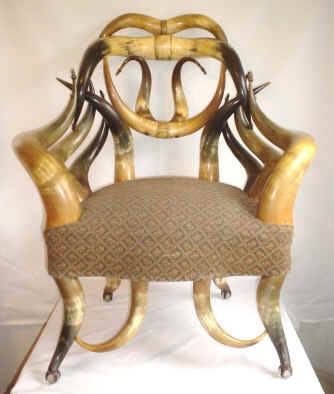
By 1884, Friedrich was
having trouble finding in his own area the size and shape of horns he wanted for his
furniture and began seeking a supply from Old Mexico.
|
Wenzel
Friedrich, San Antonio.
Two chairs of the 1880's.
Acorn finials of horn.
Tiffany glass ball casters.
Materials offered on
Friedrich chairs include:
* a silk plush (velvet)
* buggy seat leather, angora goat, jaguar, catamount and fox.
* His office chair model with a cane and walnut seat.
The
Tiffany glass ball casters were also used by Charles Puppe and William Mittmann, horn
furniture makers of the 1880's in San Antonio. Mittmann also fitted the tips of his horns
with acorn finials. Acorn finials have never been seen on any chair made by Charles Puppe.
To see Texas-made
chairs by Charles Puppe, William Mittmann, the Appel Bros. and chairs from the Horn Palace click here
and compare them to Wenzel
Friedrich.
See more Buckhorn/Friedrich furniture - click here |
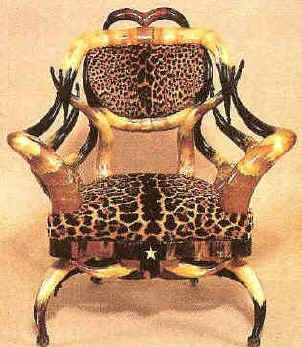
Among the most beautiful of
all horn chairs ever made. Wenzel Friedrich offered this model as his top of the line,
having a horn-veneered seat frame, inlaid ivory star, back and lower seat cushion in
jaguar hide. Sold new in 1889 for $80. |
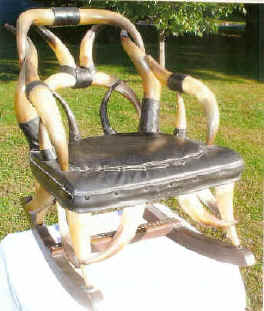
Child's Rocking Chair
Buckhorn Curio Shop
San Antonio, Texas
The type of material used on
buggy seats was commonly applied to horn furniture and mounted horns because it was
readily available at not much cost.
See more Buckhorn/Friedrich Furniture.
|
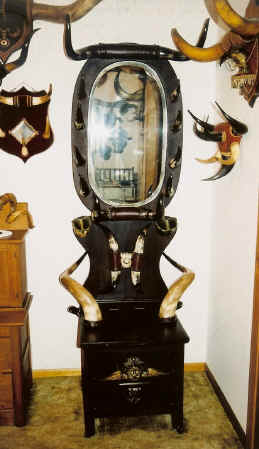
Halltree believed to be
Texas made.
6 ft. 7 inches tall. Made
about 1920. Decorated with 9 sets of horns and hooves.
Halltrees are much less commonly found than chairs.
|
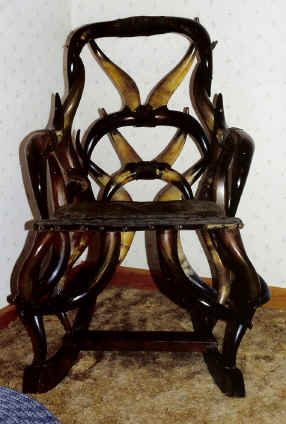
Horn-laden adult rocker from
Billie Keilman's Horn Palace
San Antonio, Texas
Read more about the Horn Palace.
|
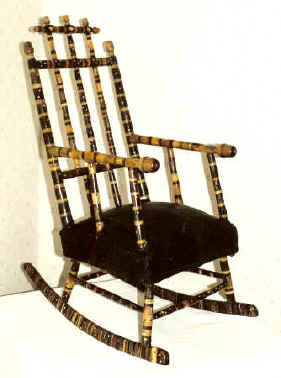
Herman Metz Child's Rocking
Chair
Framework of steel rods.
Decorated with inlaid horn.
|
28� inches
tall 14 inches wide
Cushioned seat covered with the type of material commonly used on buggies.
The back, arms, legs and rockers are fashioned in a framework of steel rods over which has
been placed 533 pieces of drilled cattle horn.
Into these pieces are inlaid 525 dots of horn.
Into the back and arms were inlaid four stars and three diamonds made of horn.
The ends of the steel rods were fitted with nine hand-carved acorn finials also made of
horn.
Displayed at the 1904 World's
Fair.
See more
Metz Furniture. |
Top of Metz Child's Rocker
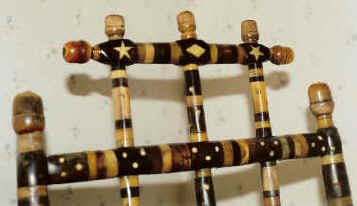
|
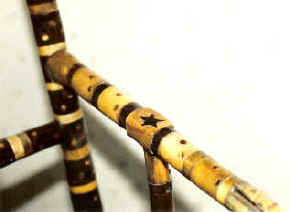
Close up of arm on Metz child's rocker
|
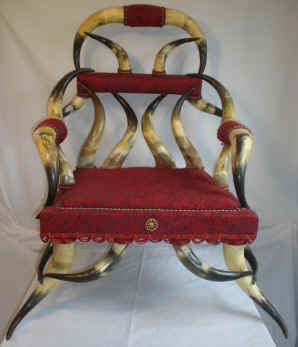
Yellow horns with black tips
add a striking contrast and help to make this a pretty chair of the 1880's. The various
sizes, shapes and placement of these horns was not an accident. Someone had a good eye for
balance.
|
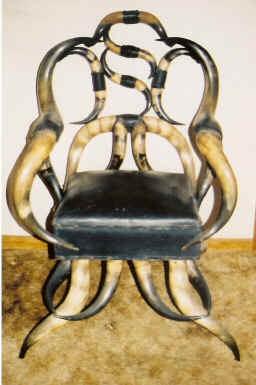
Larger than the average.
45 inches tall.
32 horns from the Kansas City Stockyards. Original buggy seat covering.
|
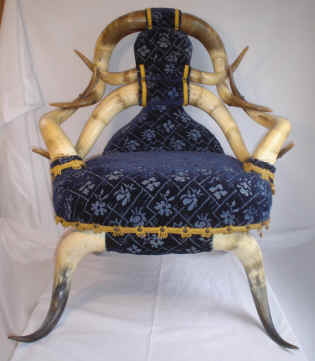
As a rule, adult horn chairs
having only 12 horns are not very appealing. This unknown maker in the 1880's made good
use of these sizable horns to complete his attractive work!
|
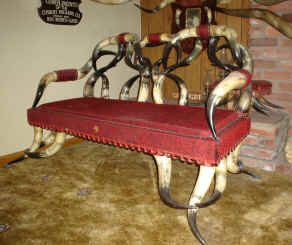
Horn Settee of the 1880's.
Restored by Alan Rogers.
Matches the chair above.
Companies making horn
furniture in Chicago in the mid-1890's could buy horns from local packing houses at $225 a
ton.
|
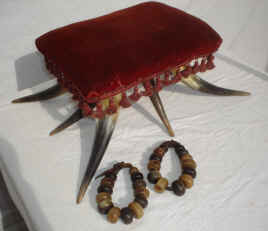
1899 Footstool
Also pictured is a set of ankle bracelets made of horn for horses.
|
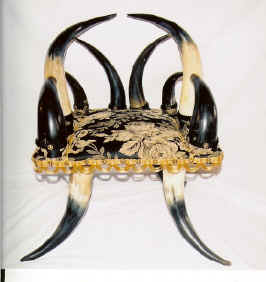
Decorative Child's Cattle
and Buffalo Horn Chair of the latter 1880's.
22 inches tall.
Restored with gold and black
fabric and
trimmed with gold loop.
|
| |
|