Horn Gallery - Page 2
|
|
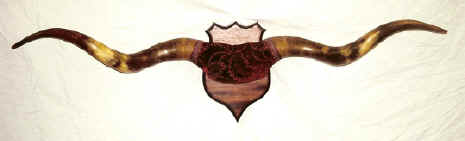
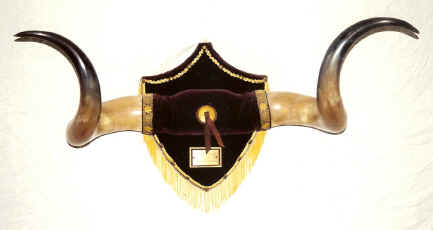
|
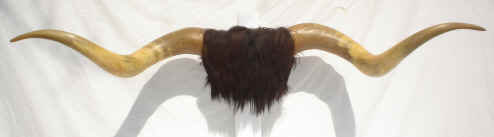
Group Photos of Some of the Alan Rogers Collection in Its Current Location |
COWTOWNS
The cattle towns thrived from Spring to early Fall with the arrival of Longhorns. Fortunes were made by local merchants supplying the cowboys' necessities. Some cowboys went back to Texas broke, having spent all of their wages wastefully. Others didn't. The cattle trade was transient. As the quarantine lines were moved further westward in the state to avoid the fear of Tick Fever, the trail herds went along and, very often, merchants moved their business to accommodate the cowboys. |
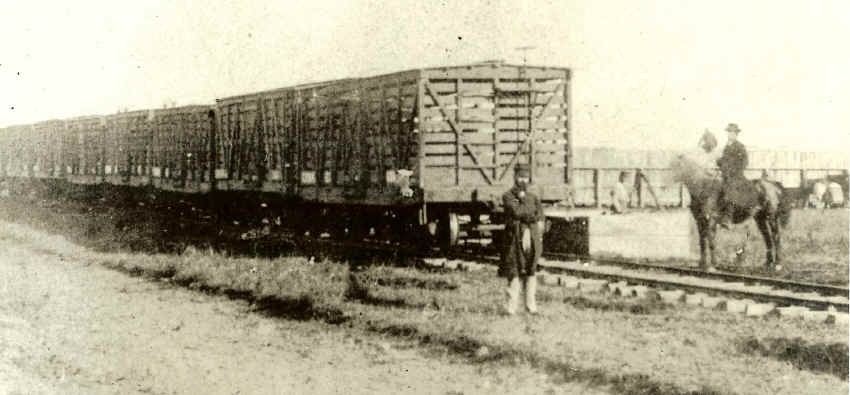
ABILENE An Alexander Gardner photo taken about 1870 at the stockyards in Abilene, Kansas. Shows cattle cars of the Kansas Pacific Railroad. Each car would hold about 20 head. The first shipment of Texas Longhorns, twenty carloads, left Abilene September 5, 1867, bound for Chicago. The loading pens at Abilene were large enough for 3000 head but thousands more were held on grazing grounds outside of town, waiting their turn. As cattle were driven up the loading chutes, cowboys would often use poles or prods of some kind to encourage them along. It is from this practice that the term "cow-puncher" arose. |
Group Photos of Some of the Alan Rogers Collection in Its Current Location |
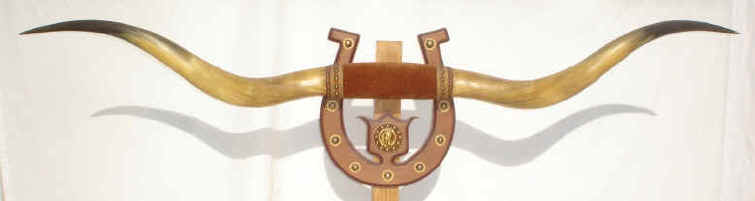
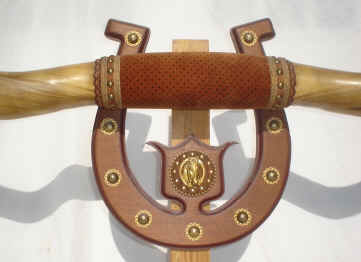
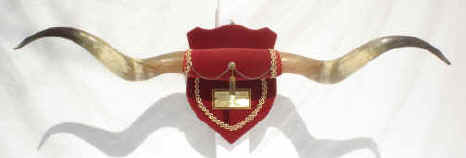
Horseshoe-Shaped
Mount |
|
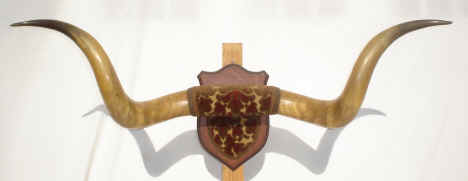
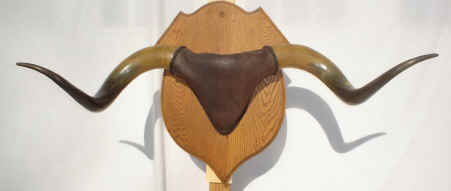
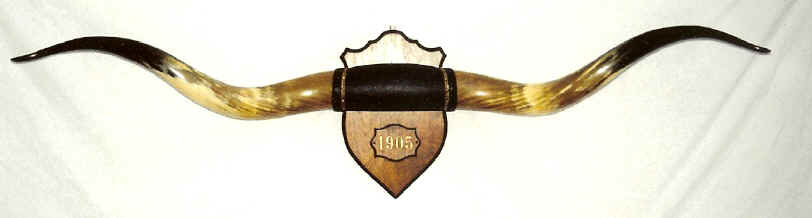
At 5 feet. 4 inches, early Longhorn steers of this grade would always have been considered a prize. Beautifully colored and well balanced in shape. Settlers who lived near the cattle trails knew in advance when the herds would soon pass by as they could see the trail dust long before the cattle arrived. |
|
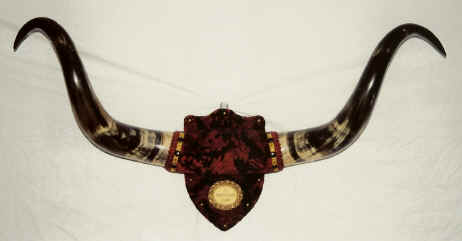
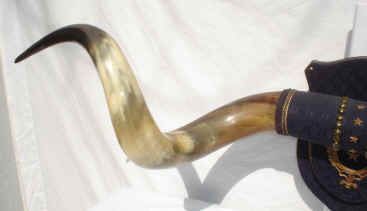
A combination of rolling dips and a beautiful twist produced these exceptional horns. Restored by |
|
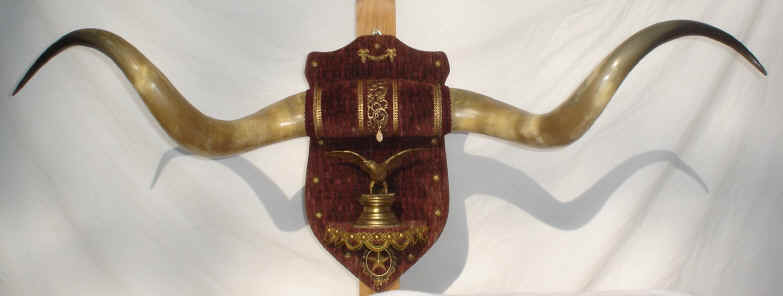
Millions of cattle were driven up the trail from 1866 - 1895. Large numbers of these were loaded onto cattle cars and shipped to eastern cities, such as Chicago, Cincinnati, Albany, and New York City. Huge numbers of Texas cattle were driven into northern ranges to stock newly established ranches in Montana, Wyoming and the Dakotas. Longhorns were driven to mining camps for beef supply, and many were herded to Indian reservations. In the beginning, Indians were allowed to chase their steers from horseback and make their kill with bows and arrows, in their old traditional way. But in time, this practice was abandoned as it became difficult to control and was replaced with the herding of cattle into corrals, where the Indians were allowed to use rifles. |
|
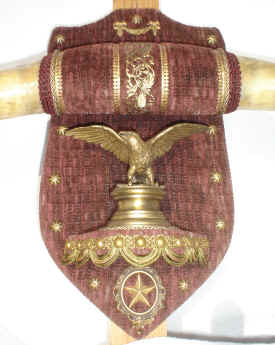
On the average, if nothing went wrong, cattle driven up the trail could make 10 to 12 miles a day. A really good day might make 15 miles. |
|
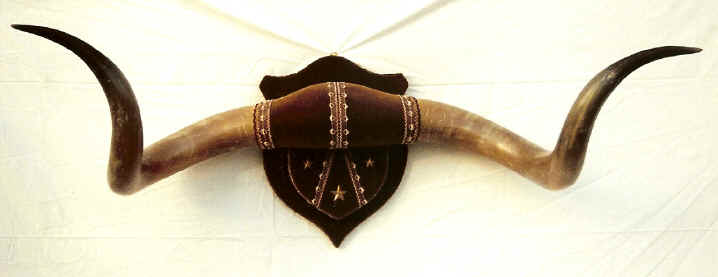
Baxter Springs, established as a shipping point in 1866, was the first cattle town in Kansas, although her shipping pens were actually just a short distance away, across the state line, in Indian Territory (Oklahoma). These early Kansas shipping points for Texas cattle were referred to as cattle towns. The term "cow town" only came into common usage about 1885, and sometimes carried a negative connotation.
|
|
Classic shape for a
Longhorn cow. |
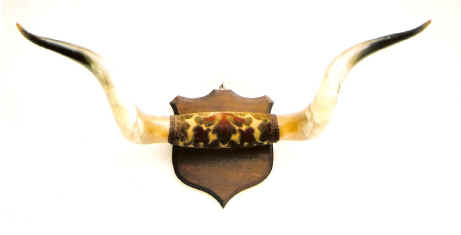
Longhorn cows are known for long lives. They commonly live into their mid-twenties and produce a calf every year, generally un-aided by man. Some cows are known to have lived 32 years. |
|
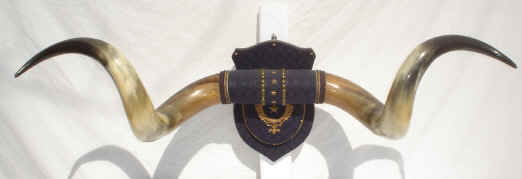
Deer, elk and moose grow antlers, and they are shed every year. Cattle, sheep and goats grow horns and are never shed. Cattle horns can grow as long as the animal lives although, in later years, the growth may slow down considerably. |
|
|
|
Return to Horn Gallery - Page 1